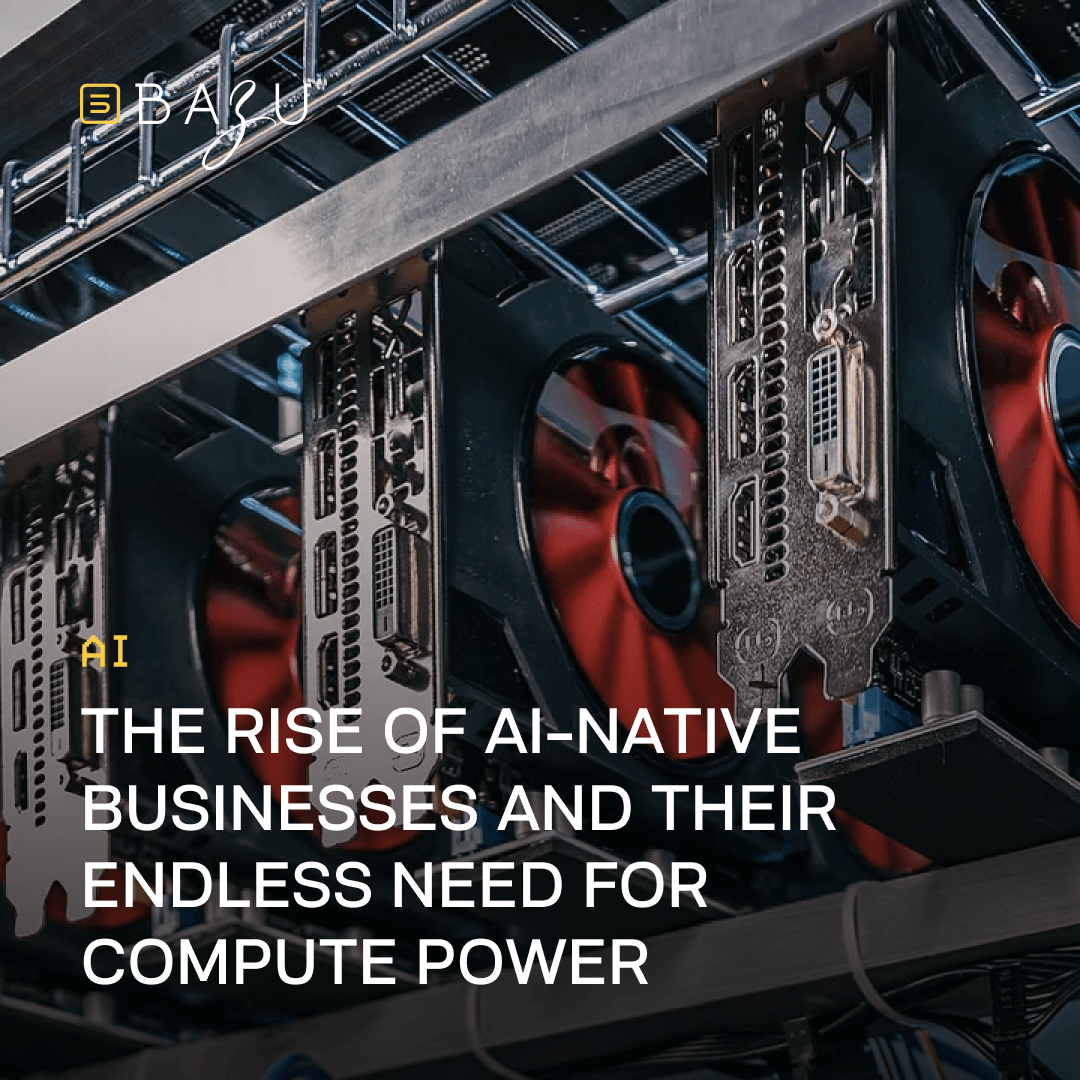
Why passive crypto income is no longer about trading
For many business owners, crypto still looks like a high-risk playground for traders. Charts, volatility, leverage, emotional decisions – all of that feels far from predictable business logic.
But over the last few years, a different model has quietly emerged: earning passive income in crypto without trading at all. No daily price watching. No speculation. No complex strategies.
Instead, value is generated through compute yield – a model where digital assets are used to finance real computing infrastructure that is already in high demand.
This approach is especially relevant today, when AI development, machine learning, and data processing are facing a global shortage of computing power.
In this article, we’ll explain:
- What compute yield is and how it works
- Why it’s often compared to “next-generation mining”
- How businesses and investors generate returns without trading
- What infrastructure is required to build such systems
- And how BAZU helps companies design and implement compute-based income platforms
If you’re looking for crypto income that follows business logic – not speculation – this guide is for you.
What is compute yield in simple terms?
Compute yield is a passive income model where capital is used to finance computing resources (servers, GPUs, data center capacity), which are then rented out to companies that need processing power.
Instead of earning from price movements, returns come from real usage of infrastructure.
In simple terms:
- Investors provide capital (often in crypto)
- Capital is used to fund or lease compute infrastructure
- This infrastructure is rented to AI companies, cloud platforms, or enterprise clients
- Rental revenue is distributed as yield
This model is similar to:
- Real estate renting, but with servers
- Equipment leasing, but for compute power
- Mining, but without relying on block rewards or coin inflation
The key difference: compute yield is demand-driven.
Why compute yield exists: the global compute shortage
One of the main drivers behind compute yield is a structural market problem.
AI demand is growing faster than infrastructure
Large language models, computer vision systems, recommendation engines, and analytics platforms all require massive compute resources. Even major cloud providers struggle to meet demand during peak periods.
Many AI companies:
- Rent compute by the hour or month
- Use multiple data centers at once
- Pay premium rates for guaranteed availability
This creates a perfect environment for third-party compute providers.
Renting compute is often cheaper than owning it
For businesses building AI products, owning servers is expensive:
- High upfront costs
- Long depreciation cycles
- Maintenance and scaling complexity
Renting compute gives flexibility – and that flexibility is what generates predictable revenue for compute yield platforms.
How compute yield generates passive income
Let’s break the process down step by step.
Step 1: Capital allocation
Investors allocate funds, often in crypto, into a compute-backed structure. This can be done through:
- Fixed investment packages
- Smart contract-based deposits
- Platform-managed investment pools
At this stage, there is no trading involved.
Step 2: Infrastructure financing
The platform uses this capital to:
- Purchase or lease servers and GPUs
- Pay data center operational costs
- Expand capacity based on demand
This is where technical and operational expertise becomes critical.
Step 3: Compute leasing
The infrastructure is rented to:
- AI startups
- Enterprise AI teams
- Cloud service resellers
- Data-intensive SaaS platforms
Leasing can be:
- Hourly
- Monthly
- Long-term contracts
Step 4: Yield distribution
Revenue from compute usage is distributed back to participants as yield:
- Daily, weekly, or monthly
- Often displayed in a dashboard
- Withdrawable in crypto or converted to fiat
This makes compute yield attractive for investors who want predictable income rather than speculative gains.
Compute yield vs traditional crypto mining
Compute yield is often called “the new mining,” but the mechanics are very different.
Traditional mining:
- Depends on block rewards
- Highly sensitive to token price
- Requires constant hardware upgrades
- Margins decrease as network difficulty rises
Compute yield:
- Depends on real market demand
- Revenue comes from service contracts
- Hardware is used for business workloads
- Predictability is higher
For many investors, compute yield feels closer to infrastructure finance than crypto speculation.
Why businesses are interested in compute yield platforms
Compute yield is not only interesting for individual investors. Many businesses see it as a new product category.
Financial platforms
Fintech companies explore compute yield as:
- A new passive income product
- An alternative to staking or lending
- A way to attract crypto-native users
AI-focused companies
AI companies may:
- Combine compute yield with their own infrastructure
- Monetize unused capacity
- Create hybrid business models
Investment groups and funds
Funds use compute yield structures to:
- Diversify crypto exposure
- Build infrastructure-backed portfolios
- Reduce volatility compared to trading
If you’re considering launching such a product, architecture and compliance matter from day one.
If you want to discuss feasibility or risks, BAZU can help you evaluate the model before development starts.
Key components of a compute yield platform
Building a compute yield platform is not only about servers. It’s a complex software ecosystem.
Core components include:
- User investment dashboard
- Package or pool management logic
- Yield calculation engine
- Payment and withdrawal systems
- Infrastructure monitoring integration
- Compliance and reporting layers
Each component must work together transparently.
This is where many projects fail – not because the idea is bad, but because the software foundation is weak.
If you’re unsure how to structure this architecture, it’s better to involve an experienced technical partner early.
Why transparency and UX are critical
Business users expect clarity.
They want to see:
- Where returns come from
- How yield is calculated
- What risks exist
- How infrastructure is utilized
A strong UX with clear dashboards and explanations is not optional.
At BAZU, we focus heavily on:
- Transparent data visualization
- Explainable yield logic
- Business-friendly interfaces
If users don’t understand the product, they won’t trust it – regardless of returns.
Industry-specific nuances of compute yield
AI and machine learning companies
AI companies often need GPU-heavy workloads. Yield models must reflect:
- Variable usage patterns
- Peak demand pricing
- Long-term contracts vs spot usage
SaaS and data analytics platforms
These clients prefer:
- Stable monthly compute
- Predictable pricing
- High uptime guarantees
Crypto-native platforms
Crypto users expect:
- On-chain transparency
- Wallet-based access
- Fast withdrawals
Enterprise clients
Enterprises require:
- SLAs
- Compliance documentation
- Clear legal structures
Each industry impacts how compute yield should be designed and communicated.
If you’re targeting a specific sector, the platform architecture must reflect that from the start.
Common mistakes in compute yield projects
Many projects struggle because they:
- Overpromise returns
- Underestimate infrastructure costs
- Ignore compliance requirements
- Build poor dashboards
- Lack scalability planning
These issues are avoidable with the right technical and product strategy.
Before writing a single line of code, it’s crucial to define:
- Target audience
- Yield mechanics
- Infrastructure partners
- Growth scenarios
This is exactly where experienced product and engineering teams add the most value.
How BAZU helps build compute yield solutions
BAZU works with businesses that want to:
- Launch compute-backed investment platforms
- Build transparent yield dashboards
- Integrate AI infrastructure into financial products
- Design scalable, secure systems from scratch
We help with:
- Product architecture
- Backend and frontend development
- Infrastructure integration
- Security and scalability planning
If you’re exploring compute yield as a product or investment platform, we can help you validate and build it properly.
If something in this article raised questions – or sparked an idea – feel free to reach out.
Final thoughts: crypto income with business logic
Passive income in crypto doesn’t have to mean trading, speculation, or blind risk.
Compute yield represents a shift toward:
- Infrastructure-backed value
- Real demand
- Predictable income streams
For business-minded investors and companies, this model feels familiar – because it follows the same principles as traditional asset leasing.
And with the right technology partner, it can be built transparently, scalably, and sustainably.If you want to explore how compute yield could work for your business, BAZU is ready to help.
- Artificial Intelligence

Written by:
NICK BULAIENKO
CTO OF BAZU COMPANY